Showing posts with label Architecture. Show all posts

Sunday, April 15, 2018

Jane’s Walk: Junction, Swansea, High Park, and Lambton House

Jane’s Walk is an annual festival of free, citizen-led walking conversations inspired by Jane Jacobs.
Screenshot: Jane's Walk: Let's Get Walking...
Jane’s Walk is an annual festival of free, citizen-led walking conversations inspired by Jane Jacobs.
Credit: janeswalk.org

Jane’s Walk is an annual festival of free, citizen-led walking conversations inspired by Jane Jacobs.

Jane’s Walks encourage people to share stories about their neighbourhoods, discover unseen aspects of their communities, and use walking as a way to connect with their neighbours.

Walks take place on May 4th, 5th, and 6th, 2018.

Here are some walks that take place in the West End of Toronto!

Jane's Walk: Literary Swansea
Literary Swansea
Led by Swansea Historical Society

SATURDAY, MAY 5
10:00am – 12:00pm
Alex Ling Fountain, NW corner of Bloor and Jane across from Jane subway station

A variety of authors and poets have called Swansea home. We’ll pass sites of significance to their lives or their writings and pause to read from the works of Lucy Maud Montgomery, Bernice Thurman Hunter, Raymond Souster, and more. This Walk will end at Swansea Town Hall.

More info: facebook.com: events: Jane's Walk: Literary Swansea

Jane's Walk: The Pulse of the Junction; Our Stories

The Pulse of the Junction; Our Stories
Led by Eugenia Evans & Tuli Parubets

SATURDAY, MAY 5
2:00 – 3:00 pm
Meet at the northwest corner of Dundas and Pacific in front of the mural

We will showcase the various murals, architecture, diverse cultures, breweries and businesses while talking about the history of the railroad and its role in the development of the Junction. We will highlight the past, talk about the present and explore its future. We will end on the north side of Dundas in front of Malta Park.

More info: facebook.com: events: Jane's Walk: The Pulse of the Junction; Our Stories

Walk as Workout
Led by Lee Scott/WoW Power Walking

SATURDAY, MAY 5 3:30 PM
SUNDAY, MAY 6 9:45 AM
Meet at the first parking lot on the left after entering Humber Bay Park west via Humber Bay Park Road West. Look for Lee by the public washrooms. She’ll be wearing a brightly coloured vest.

Join international fitness presenter, power walker and Toronto citizen, Lee Scott, as she takes you on a fun and informative walk. Research shows that cardiovascular, bone, and brain health improve when we exercise. Learn how rethinking your daily walk can improve posture, strength, heart health, and happiness. Let’s talk about how you can make that happen outside in our beautiful city. We’ll take our walk along the shores of Lake Ontario for a real mood boost and appreciation of Toronto’s waterfront trail. The Walk will end at our start position in the parking lot.

More info: facebook.com: events: Jane's Walk: Walk as Workout

Jane's Walk: Sculpture Hill – High Park in 1967

Sculpture Hill – High Park in 1967
Led by Bianca Lakoseljac, Swansea Historical Society
  
SUNDAY, MAY 6  2:00 PM - 3:30 PM
SE corner, Bloor Street and High Park Avenue

Few places provide as much personal inspiration in Toronto as High Park. Did you know that in 1967 an Art Symposium was held within the park as a Centennial Project and added ten sculptures to Sculpture Hill? We’ll explore the artistic and literary significance of High Park including Sculpture Hill with author Bianca Lakoseljac, who has featured High Park prominently in her work, and the Swansea Historical Society. This Walk will end at Sculpture Hill in High Park.

More info: facebook.com: events: Jane's Walk: Sculpture Hill – High Park in 1967

Jane's Walk: Aggie’s Wildflower Walk


Aggie’s Wildflower Walk
Led by Madeleine McDowell

SUNDAY, MAY 13 1:30 – 3:00 pm
Lambton House, 4066 Old Dundas Street

Explore the woods and river flats of Lambton Mills through the eyes of the 19th century. The area was a favourite spot of artist Agnes Dunbar Moodie, daughter of pioneer writer Susanna Moodie. Perhaps Agnes used the flowers here as models for her paintings, published in an 1867 book called Canadian Wild Flowers. Hear stories of ‘Aggie’ and the history of this area while we look for the wildflowers that inspired her. Return to the Lambton House for refreshments.

More info: facebook.com: events: Jane's Walk: Aggie’s Wildflower Walk

Here is Jane's Walk Toronto Walk Listings

Mark your calendars for May 4-6, and 13!

Wednesday, September 02, 2015

Toronto City Hall's 50th Anniversary Celebration

Toronto City Hall's 50th Anniversary Celebration: Sunday, September 13, 2015
Come out and enjoy live entertainment on the Square
and exhibit in the City Hall Rotunda, from noon to 5 pm.
Free event! Rain or shine.
Credit: www.toronto.ca/cityhall50th
50th Anniversary of City Hall

Sunday, September 13th from Noon to 5 p.m.
Come out and enjoy live entertainment on the Square and exhibit in the City Hall Rotunda, on Sunday, September 13 from noon to 5 p.m. for a FREE celebration in honour of this unique and iconic location.

Designed by Finnish architect Viljo Revell, Toronto City Hall opened in 1965 and is home to the municipal government of Toronto. It is also one of the country's most distinctive landmarks. Some may even call it an icon.

For full program and further information please go to www.toronto.ca/cityhall50th

Event details

Exhibits • Entertainment • Memorabilia

Date:
Sunday, September 13, 2015

Event time(s):
Noon to 5 p.m.

Where:
100 Queen Street West, Toronto M5H 2N1 Ontario Canada
Queen Street West & Bay Street

Events on Nathan Phillips Square

Public transit:
Take the 501 Queen Streetcar and get off at Bay Street.

Cost: FREE

Read more:
thestar.com: News / GTA / At 50, Toronto’s City Hall is still ahead of the curve: Hume
Finnish architect’s creation — both contemporary and respectful to ancient ideals — is the product of a spirit we’ve lost, Christopher Hume says.
http://www.thestar.com/news/gta/2015/08/30/at-50-torontos-city-hall-is-still-ahead-of-the-curve-hume.html

Thursday, February 04, 2010

West Toronto Junction Historical Society Meeting Tonight

West Toronto Junction Historical Society Current Events Calendar page
Thursday, February 4, 2010
The William Morris Society of Canada
Midwest Architecture Revisited Tour
Slide Presentation by Bob Roden
Credit: wtjhs.ca

Junction Historical Society Meeting


When: Thursday, February 4, 2010
  • 7:30 p.m. Refreshments
  • 7:50 p.m. Business Meeting
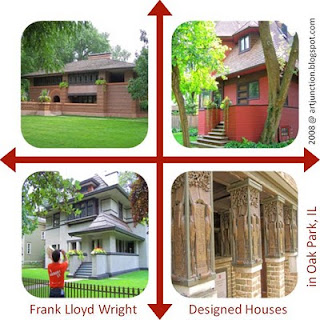
  • 8:20 p.m. Bob Roden will provide a slide presentation and commentary on the William Morris Society of Canada’s nine-day September 2008 bus tour through Michigan, Illinois, and Wisconsin. The group viewed several outstanding examples of Frank Lloyd Wright’s architecture, including Taliesin, Wingspread, the Robie House, the Meyer May House, and Wright’s home and studio in Oak Park, Illinois. They also toured some spectacular buildings by architects such as Santiago Calatrava, Marion Mahoney, Henry Hobson Richardson, Louis Sullivan, and Ludwig Mies van der Rohe.
Where: Annette Street Public Library
Lower Level, Committee Room 1
145 Annette Street, Toronto, ON M6P 1P3
(One and a half blocks west of Keele)

Please join The WTJHS for Bob Roden’s slide presentation and commentary.

Frank Lloyd Wright Designed Houses in Oak Park, IL, by artjunctionCollage: Frank Lloyd Wright Designed Houses in Oak Park, IL
2008 @ artjunction.blogspot.com

Saturday, March 31, 2007

What's in common between Odes(s)a, Staples, and Architecture?

Poster: Odes(s)a + Staples + Architecture
Credit: wikipedia, MS Word
2007 @ artjunction.blogspot.com

Munk Centre for International Studies!

My Events List for next week:

Tuesday April 10, 2007
Identities in Odes(s)a
12:00 PM - 3:00 PM
Location: 108N

Wednesday April 11, 2007
Staples and Beyond
4:30 PM - 7:00 PM
Location: 156S

Thursday April 12, 2007
Philosophy, Architecture, History
4:00 PM - 6:00 PM
Location: 108N


Munk Centre for International Studies
University of Toronto
1 Devonshire Place
Toronto ON M5S 3K7
Tel: (416) 946-8900
www.utoronto.ca/mcis/


Details:

Identities in Odes(s)a

Date: Tuesday April 10
Time: 12:00 PM - 3:00 PM
Room: 108N, North House

Speakers:
Tanya Richardson
Assistant Professor, Wilfrid Laurier University

Abel Polese
Jacyk Visiting Scholar, Research Fellow at the Hannah Arendt Institute in Dresden

Olga Andriewsky
Trent University

Contact Info:
Larysa Iarovenko

Description:

Tanya Richardson (Assistant Professor, Wilfrid Laurier University), "Between Cosmopolitan and Provincial: Spaces of History and the Place of Odesa in Post-Soviet Ukraine"
Abel Polese (Jacyk Visiting Scholar, Research Fellow at the Hannah Arendt Institute in Dresden), "Weird Mathematics in Odesa: Why One Odessan is a Ukrainian but ten Odessans are Russian?"

Main Sponsor:
Petro Jacyk Program for the Study of Ukraine
Trent University

Professor Olga Andriewsky
Chair of History Department, Trent University
e-mail: oandriewsky@trentu.ca

Research interests: Russia as empire; national identity and imperial discourse, Russian-Ukrainian relations.

Teaching interests: Modern Russia and Eastern Europe; Russian Revolution; Stalin and Stalinism; and Decline and Fall of the Soviet Union.

* "The Russian-Ukrainian Discourse And The Failure Of The 'Little Russian Solution', 1782-1917" in Peoples, Nations, Identities: The Russian-Ukrainian Encounter, project jointly sponsored by the Harriman Institute, Columbia University; the Seminar on East European Studies, University of Koln (Germany); and the Canadian Institute of Ukrainian Studies, University of Alberta (forthcoming 2003);
* "The Paradoxes of Reform: Higher Education in Post-Soviet Ukraine" in Problems of Development of Ukraine since Independence (forthcoming, Canadian Scholars' Press, 2003)


Abel Polese
Abel Polese, from Italy, has been learning languages most of his life, to the extent where he is now fluent in seven, including English and Russian. He has various languages qualifications and has spent time studying at Coventry University.


Philosophy, Architecture, History

The Eighth Hermann Levin Goldschmidt Memorial Lecture

Date: Thursday April 12
Time: 12 4:00 PM - 6:00 PM
Room: 108N, North House

Speaker:
Claudia Brodsky-La Cour
Princeton University

Contact Info:
Edith Klein

Main Sponsor:

Joint Initiative in German and European Studies
Co-sponsored by
Foundation Dialogik
Centre for Comparative Literature
Department of Philosophy
Jewish Studies Program

Claudia J. Brodsky Lacour
Claudia Brodsky Lacour is Professor of Comparative Literature at Princeton University and ancien directeur de programme at the Collège International de Philosophie, Paris. She is the author of The Imposition of Form: Studies in Narrative Representation and Knowledge (1987), Lines of Thought: Discourse, Architectonics, and the Origin of Modern Philosophy (1996), and several articles on German, French, and English literature and philosophy from the Enlightenment through the present.

Lines of Thought: Discourse, Architectonics, and the Origin of Modern Philosophy (Paperback)
by Claudia Brodsky Lacour (Author)

Editorial Reviews
Book Description
It is considerably easier to say that modern philosophy began with Descartes than it is to define the modernity and philosophy to which Descartes gave rise. In Lines of Thought, Claudia Brodsky Lacour describes the double origin of modern philosophy in Descartes’s Discours de la méthode and Géométrie, works whose interrelation, she argues, reveals the specific nature of the modern in his thought. Her study examines the roles of discourse and writing in Cartesian method and intuition, and the significance of graphic architectonic form in the genealogy of modern philosophy.
While Cartesianism has long served as a synonym for rationalism, the contents of Descartes’s method and cogito have remained infamously resistant to rational analysis. Similarly, although modern phenomenological analyses descend from Descartes’s notion of intuition, the “things” Cartesian intuitions represent bear no resemblance to phenomena. By returning to what Descartes calls the construction of his “foundation” in the Discours, Brodsky Lacour identifies the conceptual problems at the root of Descartes’s literary and aesthetic theory as well as epistemology. If, for Descartes, linear extension and “I” are the only “things” we can know exist, the Cartesian subject of thought, she shows, derives first from the intersection of discourse and drawing, representation and matter. The crux of that intersection, Brodsky Lacour concludes, is and must be the cogito, Descartes’s theoretical extension of thinking into material being. Describable in accordance with the Géométrie as a freely constructed line of thought, the cogito, she argues, extends historically to link philosophy with theories of discursive representation and graphic delineation after Descartes. In conclusion, Brodsky Lacour analyzes such a link in the writings of Claude Perrault, the architectural theorist whose reflections on beauty helped shape the seventeenth-century dispute between “the ancients and the moderns.”
Part of a growing body of literary and interdisciplinary considerations of philosophical texts, Lines of Thought will appeal to theorists and historians of literature, architecture, art, and philosophy, and those concerned with the origin and identity of the modern.


From the Back Cover

“An engaging and original piece of work—a very good book. Lines of Thought will take a respected place amongst interdisciplinary studies of philosophy.”—Jonathan Ree, Middlesex University

“An excellent, highly disciplined reading; a truly interdisciplinary achievement. One of the most striking qualities of this book is the way in which Brodsky Lacour opens up broader historical, philosophical, and literary perspectives, pertaining particularly to present discussions of Modernity and deconstruction, by strictly pursuing her rigorous reading of Descartes’s and Perrault’s texts. The basis for such a mediation is the author’s excellent literary analyses and her impressive understanding of philosophical and mathematical issues. In thinking through the figures of line and architecture in and as thought and discourse, she unfolds a certain construction of modern subjectivity and contemporary theoretical problems in a highly illuminating way.”—Rainer Nagele, The Johns Hopkins University